Sustainable and stable energy production for the benefit of society
The production goal of Westenergy is to utilise the non-recyclable portion of municipal waste as efficiently and reliably as possible in energy production. This means that the Westenergy plant operates continuously, around the clock, for almost the entire year. Energy production is only interrupted during an annual maintenance period lasting approximately two weeks.
In addition to striving for continuous energy production, the energy produced by our plant plays a significant role in reducing the environmental impact at the local level. Fossil fuels place a heavy burden on the environment, and by utilising the non-recyclable part of municipal waste as energy, Westenergy helps reduces the need for fossil-fuel based energy production.
We produce energy in two forms — electricity and district heating — and optimise the production ratio in collaboration with Vaasan Sähkö Oy.
We produce energy in two forms — electricity and district heating — and optimise the production ratio in collaboration with Vaasan Sähkö Oy. Due to market conditions and fluctuations in electricity prices, energy production in recent years has increasingly focused on district heating, a trend that became more pronounced in 2025. The development of Westenergy was further strengthened by the extensive 10-year turbine maintenance carried out during the spring service stop, as well as the renovation of Vaasan Sähkö Oy’s heat storage facility at the end of the year. While these measures temporarily reduced electricity production capacity, they significantly improved the stability of district heating supplies.
In 2025, we produced 419 GWh of district heating, which corresponds to approximately 60% of Vaasa’s total district heating demand.
In 2025, nearly 189,000 tonnes of waste were utilised for energy production. This resulted in the generation of 419 gigawatt-hours of district heating, covering approximately 60% of Vaasa’s total district heating demand. As in previous years, all the district heating required in the Vaasa region during the summer months was produced by the plant.
Last year, electricity generation reached 50.6 gigawatt-hours, which was supplied to the national grid, corresponding to an annual consumption of nearly 2,700 electrically heated detached houses. In addition, electricity was generated for the plant’s internal processes and equipment, including process maintenance, and equipment operation.
Last year, we supplied 50.6 GWh of electricity to the national grid, corresponding to an annual consumption of nearly 2,700 electrically heated detached houses.
From a production perspective, waste is a highly variable raw material, which presents operational challenges. Fluctuations in waste composition make process control more demanding and place a strain on equipment and flue gas treatment systems. However, in 2025, these challenges were successfully addressed through improved waste supply agreements with our owner companies.
Contrary to expectations, the waste market developed in such a way last year, that we received more municipal waste unsuitable for recycling than anticipated. However, we managed to respond to the situation, thanks in particular to the new intermediate storage and warehouse facilities built in recent years. Experience in waste baling and unbaling, combined with standardised operating procedures, ensured that waste energy could be utilised proactively and reliably by utilising stored waste.
Production figures in 2025
 Availability0%
 Employees0
 Operating hours0h
 Waste to energy0t
 Electricity0gWh
 District heat0gWh
 Ash0t
Ash0t Metal0t
 Flue gas treatment residue (APC)0t
- Boiler ash0t
 Waste water0m3
- Rain and melt water0m3
High availability through cooperation and expertise
The operation of the Westenergy plant is managed by the Production Manager and a team of 15 operating staff. The maintenance team is responsible for daily maintenance, repairs, and rapid responses to faults. The team includes a Maintenance Manager, electrical and automation technicians, mechanical technicians, and a maintenance planner.
Close cooperation between the maintenance team and operating staff is a cornerstone of Westenergy’s plant operations. Rapid response times, preventive maintenance, and continuous process monitoring have ensured consistently high plant availability year on year. In 2025, plant availability remained at an impressive 94.7%.
In 2025, plant availability remained at an impressive 94.7%.
This high level of availability means that the plant operated continuously throughout the entire year, apart from the scheduled two-week annual service stop. As in previous years, this was scheduled for the spring, when the demand for district heating is low. The annual maintenance service stop is essential for the operation of the plant, as it allows for maintenance and repair work that cannot be carried out during normal operations.
The primary objectives of the annual maintenance are to complete planned maintenance work efficiently and to resume operations as quickly as possible. To ensure this, approximately 160 external professionals participate in the annual service stop each year, alongside Westenergy’s own personnel. In 2025, the maintenance work during annual service stop was completed efficiently and on schedule. Looking ahead, future maintenance work will include upgrades such as converting the grate control system to a continuous operation model. This will improve the consistency of the waste incineration process and extend the lifespan of the equipment.
In 2025, the maintenance work during annual service stop was completed efficiently and on schedule.
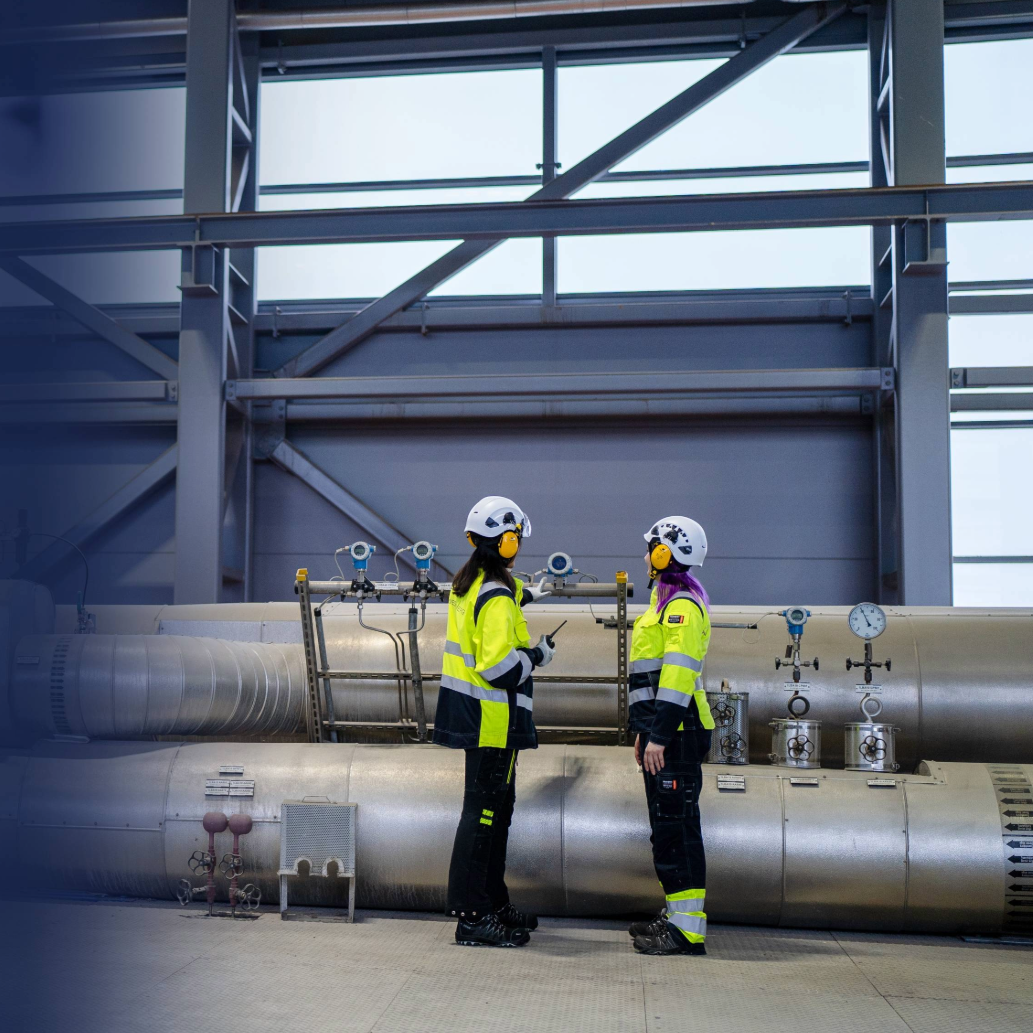
In addition to the successful annual service stop, preventive maintenance work carried out throughout the year has played a key role in maintaining high plant availability. Equally important is the expertise of our personnel and the support provided by the service networks of key equipment suppliers.
The reporting year also included significant learning and development work. The new maintenance management system, completed in 2024, was in full operation for the first time last year. It has been proven to be particularly effective in terms of improving the reporting and documentation of maintenance work. Over the course of the year, the system’s functionalities were further developed based on user experiences, particularly with regard to improving purchasing processes. The aim for the future is to further develop the functions of the system, for example by strengthening occupational safety functions.